Robot Joint Torque Sensor RFQ and Selection
A robot joint torque sensor is an in-axis sensing element used to measure joint torque for control, characterization, contact response, or safety-related monitoring. This page is an unbranded product-type RFQ entry, not a fixed model, stocked item, or claim of confirmed availability. RobotPiece uses the application, load case, interfaces, environment, documentation, and commercial request to clarify what configuration should be quoted.
A joint torque sensor may be integrated into a flange, shaft, or compliant joint element. A robot torque sensor does not by itself define whether other force or moment components are measured. The phrase torque sensor robot describes the application rather than a sensor architecture, while a joint torque transducer still needs a stated signal chain and calibration boundary.
Robot Joint Torque Sensor Selection Requirements

Begin with the function and operating cycle. Compare working range, transient and overload cases, bidirectional behavior, resolution, accuracy, repeatability, hysteresis, stiffness, bandwidth, output, sample rate, temperature, mounting, calibration, and signal-chain scope. Provide normal operation, repeated transients, and credible abnormal events separately. A maximum value without its duration, frequency, boundary conditions, and acceptance method is not sufficient for responsible selection.
Provide the load path, flange or shaft geometry, bolt pattern, centering feature, allowable diameter and length, hollow-bore need, axial and radial parasitic loads, bending moment, preload, coupling arrangement, cable exit, and installation torque requirements.
Define supply, analog or digital output, sample and control-loop rates, host interface, filtering, synchronization, connector, cable, grounding, startup behavior, fault reporting, and whether amplifier or acquisition electronics are included.
How to Specify A Robot Joint Torque Sensor
Submit a requirement drawing or marked interface sketch where possible. Separate required values from targets and open questions. Identify the drawing revision, units, coordinate convention, test condition, and which organization owns the surrounding mechanics, controls, installation, and final validation. If alternatives are acceptable, state which interfaces must remain unchanged and which design variables may be reviewed.
Engineering Reference
The following primary-source engineering material is useful for understanding the component principle and the kinds of parameters that need definition. It is background only; it does not establish the specification, availability, compatibility, or performance of a proposed RobotPiece configuration. Review the engineering reference.
Quotation Scope to Confirm
Possible scope items include: sensing body; flexure or shaft; amplifier; interface electronics; cable; connectors; mounting adapters; calibration data; coordinate convention and installation guidance. None is assumed to be included. The quotation should list every supplied item, quantity, interface, accessory, drawing, document, test, and packaging requirement. It should also identify customer-supplied items and the information still required before a firm configuration can be accepted.
Current specifications are confirmed per requirement. RobotPiece does not infer ratings, fit, life, accuracy, compatibility, or included items from a generic name or product-type image. Final construction, dimensions, connectors, finish, and appearance depend on the approved configuration and supply boundary.
Inquiry Checklist
- Working range
- Transient and overload cases
- Bidirectional behavior
- Resolution
- Accuracy
- Repeatability
- Hysteresis
- Stiffness
- Bandwidth
- Output
- Sample rate
- Temperature
- Mounting
- Calibration
- And signal-chain scope
- Prototype and expected production quantity, delivery destination, schedule, and required documents
Send drawings and requirements through the RobotPiece quote list or the contact page. Related products are organized in the Sensors category.
Frequently Asked Questions
How is a joint torque sensor different from a six-axis sensor?
A joint sensor may focus on torque around one axis, while a six-axis device resolves three forces and three moments. The required load components and control objective should define the choice.
Does a robot torque sensor include the amplifier and cable?
Only when the quotation says so. Sensing body, electronics, cable, connector, data interface, calibration documents, and mounting adapters are separate scope items until confirmed.
Can RobotPiece confirm a robot joint torque sensor from an image?
No. An image can help identify the general product family, but selection and quotation require the interface, operating conditions, scope, quantity, destination, and supporting drawings or data. Unknown values should be marked as open rather than guessed.
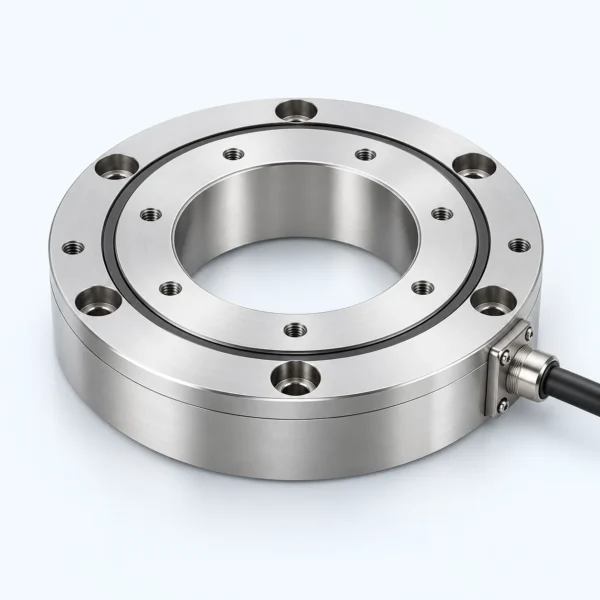
Image note: the cover is a conceptual product-type illustration, not a photograph of a confirmed model. Actual appearance, dimensions, connectors and supplied items must be confirmed in the quotation.
